Professional-looking seams and finished edges come easily with a user-friendly introductory serger. If you’ve been avoiding sewing projects that require neat, durable finishes, it’s time to explore sergers for beginners. These machines aren’t just for pros—they’re designed to help you create polished results right away. You’ll be amazed at how quickly you can hem, seam, and trim fabric in one simple step.
No more frayed edges or bulky seams that ruin your hard work. A beginner-friendly serger takes the guesswork out of professional finishing. You’ll feel more confident tackling projects like knit tops, pillows, or even baby clothes. Just a little practice, and your stitching will look store-bought. Trust me, it’s easier than you think—and way more fun then fighting with a regular machine.
Product Comparison Table: 9 Best Sergers For Beginners
| Image | Why We Like This Product | Editor’s Rating | |
 |
Sew Me! Sewing Basics: Simple Techniques and Projects for…
|
9.6 |
Read Review |
 |
Pocket Guide to Sergers: Use Your Machine with Confidence…
|
9.4 |
Read Review |
 |
Serger Essentials: Master the Basics and Beyond!
|
9.2 |
Read Review |
 |
Sewing with Sergers: The Complete Handbook for Overlock Sewing…
|
9.0 |
Read Review |
 |
First Time Sewing with a Serger: The Absolute Beginner’s…
|
8.8 |
Read Review |
 |
How To Use A Serger: The Only Serger Guide…
|
8.6 |
Read Review |
 |
ABCs of Serging: A Complete Guide To Serger Sewing…
|
8.4 |
Read Review |
 |
Serger Sewing Basics
|
8.2 |
Read Review |
 |
Easy Serger Sewing for Beginners: Your Simple Guide to…
|
8.0 |
Read Review |
Quick Review For Top 9 Sergers For Beginners
Sew Me! Sewing Basics: Simple Techniques and Projects for First-Time Sewers (Design Originals) Learn to Sew for Beginners with Easy Step-by-Step Projects from Seams to Zippers
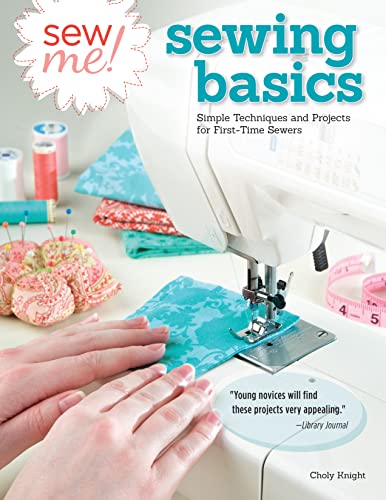
The Design Originals Sew Me! Sewing Basics softcover book is a straight-forward guide for people who have never touched a sewing machine. It does not assume you know anything. You start from zero. The book teaches you simple techniques and projects for first-time sewers, just like the title says.
You will learn the basics step by step. The book covers things like how to thread a needle, how to sew a straight seam, and how to put in a zipper.
It takes you from the very beginning to more useful skills. Every lesson is paired with a project, so you practice as you learn. This helps you remember what you just read.
The projects are small and managable. They are designed to build your confidence. You might start with a simple pillow or a tote bag. Then you move on to something with a zipper or a buttonhole. The instructions are written in plain language. There are lots of pictures to show you what to do.
You dont have to guess at the next step.
The book is a softcover, which makes it easy to lay flat next to your machine. That is a small detail, but it matters when you are following directions. You can flip through the pages without them closing on you. The Design Originals brand is known for craft books that are clear and practical. This one fits that reputation.
If you have been wanting to learn to sew but felt intimidated, this book is a good place to start.
Pocket Guide to Sergers: Use Your Machine with Confidence (Landauer) How to Use a Serger – Gathering, Cording, Cover Stitching, Ruffles, Maintenance, Troubleshooting, and More

The Landauer Pocket Guide to Sergers: Use Your Machine with Confidence is a compact, practical manual designed to help you get the most out of your serger. This book cuts straight to the point, offering clear instructions on a wide range of techniques and everyday tasks. If you have ever felt unsure about how to use your machine or what all those dials and threads actually do, this guide is here to help.
The book covers the essential skills you need.
You will learn how to handle gathering, cording, and cover stitching. It also explains ruffles, which can be tricky on a serger. The instructions are written in a simple, step-by-step way. You can follow along right at your machine. The goal is to build your confidence, not to overwhelm you with jargon.
Maintenance is a big part of owning a serger, and this guide does not skip it. You will find clear advice on cleaning your machine, changing needles, and threading the loopers.
The troubleshooting section is especially helpful. It walks you through common problems like skipped stitches, tension issues, or fabric bunching. Instead of guessing, you can look up the issue and get a direct fix. This saves time and frustration.
The book is small enough to keep near your sewing area. It is not a thick textbook. It is a quick reference you can grab when you need it. The language is friendly and conversational.
Serger Essentials: Master the Basics and Beyond!

The Serger Essentials: Master the Basics and Beyond course is a straightforward guide for anyone who wants to get comfortable with their serger machine. This isn’t a fancy sewing book, its a practical, hands-on resource. It starts with the very basics, so you don’t need any prior serger experience. You will learn how to thread your machine, which is often the hardest part, and how to tension the threads so your stitches look clean and professional.
The course covers all the common stitches, like the 4-thread overlock and the 3-thread narrow hem. It also goes into the less common stuff, like using the cover stitch and the chain stitch, so you can get more out of your machine.
You will find clear, step-by-step instructions for each technique. The focus is on building your skills gradually, with lots of pictures to show you what to do. You won’t be left guessing.
Each section builds on the last, so you learn the fundamentals before moving on to more advanced projects. The course also covers how to handle different fabrics, from lightweight silks to heavy denim. This means you can work on a wide range of projects, from delicate blouses to sturdy jeans, without getting frustrated.
One of the best parts is the trouble-shooting section.
Sewing with Sergers: The Complete Handbook for Overlock Sewing (Serging . . . from Basics to Creative Possibilities series)

The ‘Sewing with Sergers: The Complete Handbook for Overlock Sewing’ is a straightfoward guide for anyone who wants to master their serger. This book is part of the Serging . . . from Basics to Creative Possibilities series, and it focuses on giving you practical, hands-on knowledge. You will learn how to set up your machine, thread it, and adjust the tension without getting frustrated. The handbook covers all the essential stitches, from a simple overlock to a rolled hem.
It explains what each stitch looks like and when you should use it.
The book is built around your needs as a sewer. It shows you how to handle different fabrics, like knits, wovens, and delicate silks. You will find clear instructions for finishing seams so they look professional and last longer. There are also sections on adding decorative touches, like flatlocking and gathering, which give your projects a custom feel. The guide does not assume you already know everything.
It starts with the basics and builds up to more complex techniques. Each step is explained in plain language, with helpful pictures to guide you.
You will appreciate the chapters on troubleshooting. Sergers can be finicky, and this book helps you fix common problems like skipped stitches, fabric puckering, or thread breaking. It saves you time and fabric by showing you what to look for. The handbook also includes projects to practice your skills.
First Time Sewing with a Serger: The Absolute Beginner's Guide–Learn By Doing * Step-by-Step Basics + 9 Projects (Volume 8)
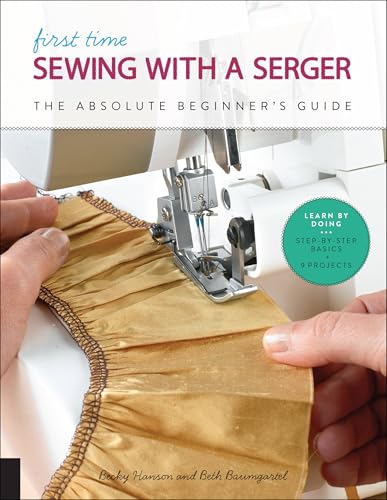
The ‘First Time Sewing with a Serger: The Absolute Beginner’s Guide–Learn By Doing * Step-by-Step Basics + 9 Projects (Volume 8)’ is a book written for someone who has never touched a serger before. It gets straight to the point. If you just bought a serger or you are thinking about getting one, this guide is for you.
This book is all about learning by doing. You will not just read about how to thread the machine. You will actually do it.
The step-by-step basics start from the very beginning. It shows you what each part of the serger does. It explains why you need different needles and threads. The language is simple. You do not need to know any sewing jargon to start.
After you get comfortable with the basics, you move into the projects. There are 9 projects total. Each project is designed to teach you a new skill. You start with something simple like a basic seam. Then you move on to rolled hems and flatlocking.
The projects are practical to. You will make things like a scarf, a throw pillow, or a simple top. Each project builds on the last one. So you are always learning somthing new without feeling overwhelmed.
The book is written in a friendly tone. It does not assume you know anything. It explains common mistakes and how to fix them. It tells you what to do if the thread breaks or the tension is off. There are pictures for every step. You can see exactly what the machine should look like.
How To Use A Serger: The Only Serger Guide You’ll Ever Need
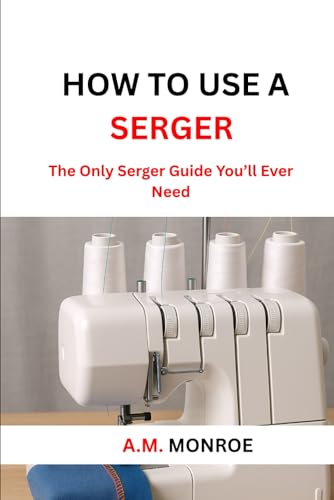
The How To Use A Serger: The Only Serger Guide You’ll Ever Need is exactly what the name says. It is a comprehensive manual written for sewists who want to master their serger without the frustration. This guide does not assume you already know the basics. It starts from the very beginning.
You will learn how to thread your machine properly. Threading a serger is often the hardest part. This book breaks it down into clear, step-by-step instructions.
It covers common threading problems and how to fix them. You will also learn about tension adjustments. Tension can be tricky, but this guide explains it in a simple way. You will understand when to tighten or loosen each thread for different fabrics.
The guide covers all the basic stitches. You will learn the four-thread overlock, the three-thread narrow hem, and the rolled hem. Each stitch is explained with practical uses.
You will know which stitch to use for knits, wovens, and delicate fabrics. There are also sections on differential feed. This feature helps with gathering or preventing waviness on edges. The book shows you how to adjust it for perfect results every time.
You will find tips for common serger projects. Hemming t-shirts, seaming stretchy fabrics, and adding decorative threads are all covered. There is advice on choosing the right needles and threads.
ABCs of Serging: A Complete Guide To Serger Sewing Basics (Creative Machine Arts Series)

The Creative Machine Arts Series ABCs of Serging: A Complete Guide To Serger Sewing Basics is a hard cover book that helps you get comfortable with your serger. It is not a flashy manual or a sales pitch. It is a straightforward guide for anyone who owns a serger or is thinking about buying one. You might be a beginner who just unwrapped a new machine. Or you might have had a serger sitting in the closet for years because it seems too complicated.
This book is for you.
The book covers the basic parts of a serger. You will learn about the loopers, the needles, and the tension dials. It explains how to thread your machine step by step. Threading a serger can feel like a puzzle, but the guide makes it simpler. Each chapter builds on the last one. You start with straight stitches and move to rolled hems and decorative edges. There are clear pictures and diagrams to show you what to do. The text is direct and not filled with jargon.
You do not need to know fancy terms to follow along.
One of the best parts is the troubleshooting section. Sergers can be finicky. They might skip stitches or make a mess of your fabric. This book tells you what to look for and how to fix common problems. It also covers basic maintainence like cleaning and oiling. You will feel more confident when something goes wrong because you will have a place to check.
The hard cover binding means it will hold up on your sewing table.
Serger Sewing Basics

The Serger Sewing Basics is a comprehensive guide designed for anyone who wants to get comfortable with a serger machine. This book breaks down the intimidating parts of serger sewing into easy to understand steps. You will learn how to thread the machine, adjust tension, and handle different types of fabric. The focus is on building your confidence, not just showing you fancy stitches.
The book starts with the absolute fundamentals.
You will find clear diagrams and plain language explanations for each part of the serger. It covers how to change the needles and how to properly oil the machine. The guide also includes a trouble shooting section for common problems like skipped stitches or fabric bunching. You will learn why the machine acts a certain way, so you can fix it yourself next time. It does not assume you already know anything about sergers.
Each chapter builds on the last one.
Practical projects are included to help you practice. You will sew a simple scarf, a set of napkins, and a basic t-shirt. These projects are chosen to teach you specific skills. For example, the scarf project focuses on getting a clean rolled hem. The t-shirt project teaches you how to set up the differential feed for knit fabrics. The instructions are step by step, with photos at key stages.
Easy Serger Sewing for Beginners: Your Simple Guide to Clean Seams, Smooth Edges, and Confident Serging
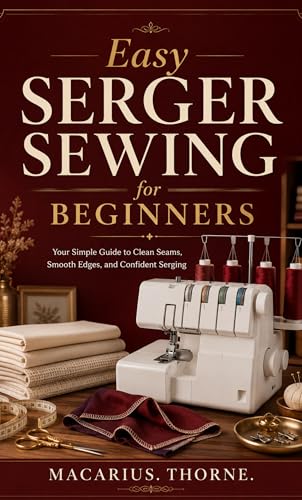
The Easy Serger Sewing for Beginners is a straightforward guide designed to help you get comfortable with your serger machine. It focuses on the basics, so you dont need any prior experience with overlock stitching. This book is written for people who want clean seams and smooth edges without the frustration.
You will learn how to thread your serger correctly, which is often the hardest part.
The guide breaks down the process into simple steps, showing you exactly where each thread goes. It covers common mistakes and how to fix them, so you can avoid jams and tangles. There is a focus on tension settings, helping you understand why your stitches might look loose or too tight. You will get practicle advice on adjusting the differential feed to prevent wavy or puckered fabric.
The content walks you through basic serging techniques.
You will practice creating a 4-thread overlock stitch, which is strong and durable for most fabrics. The book also covers the 3-thread stitch for lighter materials and rolled hems for delicate edges. Each technique is explained with clear, step-by-step instructions. There are tips on how to serge curves and corners without cutting into your fabric.
Sergers For Beginners Buying Guide
Finish seams professionally and learn fast with a serger built for beginners. If you’ve ever struggled with fraying edges or bulky seams on your sewing projects, a serger is teh tool you didn’t know you needed. It trims, stitches, and finishes fabric all in one pass, giving your clothes that store-bought look. But not all sergers are beginner-friendly. You need something simple, not intimidating. Let’s look at what matters most.
Threading System
Threading a serger can feel like a puzzle. Some machines have color-coded paths and numbered guides that make it way easier. Look for a model with a lay-in or drop-in threading system. That means you don’t need tweezers or a flashlight to get the job done. A clear diagram printed right on the machine helps too. You’ll save time and frustration, especially when you’re just starting out.
Stitch Options
Do you really need a dozen stitches? Not as a beginner. A basic 3-thread or 4-thread overlock stitch covers most needs. The 4-thread option is stronger, so it’s great for knits and woven fabrics. Some machines also offer a rolled hem feature. That’s a nice bonus for lightweight fabrics like chiffon. Keep it simple. Two or three stitch types are plenty to learn on.
Differential Feed
Ever had wavy edges on a knit fabric? That’s where differential feed comes in. It controls how the fabric moves through the machine. You can adjust it to prevent stretching or puckering. This feature is common on most sergers now, but check it’s included. It makes a huge difference when you sew stretchy materials like jersey or rib knit.
Ease of Maintenance
Sergers need cleaning and oiling to run smooth. Some models come with a built-in brush or easy-access looper area. Look for a machine that lets you reach the internal parts without a struggle. A removable stitch finger or cutting knife also helps with cleaning. You don’t want to spend more time maintaining the machine than using it.
Budget vs. Value
You can find sergers under $200, but cheaper models can be frustrating. They might jam often or be hard to thread. Spending a little more—around $300 to $500—gets you a reliable machine with better features. It’s a investment that will last through many projects. Don’t skimp on quality just to save a few bucks now.
Frequently Asked Questions About Sergers For Beginners
What exactly is a serger?
A serger is a special sewing machine. It cuts fabric, seams, and finishes edges all at once. It makes neat, professional-looking seams. It’s great for knits and stretchy fabrics. Think of it as a speed tool for finishing your projects.
Is a serger hard to use for a beginner?
Not at all! Sergers look scary but thay are simple once you learn. The hardest part is threading. Many beginner models have color-coded guides. You can master teh basics in one afternoon. Start with simple practice projects like pillowcases or hemming towels. You’ll get the hang of it fast.
What should I look for in a beginner serger?
Look for a serger with color-coded threading. This makes set-up easy. Choose one with a differential feed. This helps with stretchy or slippery fabrics. A 3 or 4 thread option is perfect for starting out. Check that it has a free arm for sleeves and pant legs. Avoid very cheap models – they often frustrate beginners.
Do I need a serger if I already have a sewing machine?
Yes! They are different tools. Your regular sewing machine is good for straight stitches and buttonholes. A serger finishes edges and prevents fraying. Many projects use both machines together. You get faster results and cleaner finishes. It’s like having a helper for your sewing.
Can I use regular thread in a serger?
Not really. Sergers need cone thread. This is thinner and comes on large cones. Regular spools are too small and cause tension problems. Buy a set of beginner cone threads. They last a long time and work best. You’ll notice a big difference in stitch quality.
How much should I spend on my first serger?
Plan to spend between $200 and $400. This gets you a reliable machine with basic features. Cheaper models under $150 often have issues. They break or frustrate you. More expensive ones aren’t needed yet. Invest in a mid-range option from a known brand. It will last for years and help you learn propper techniques without hassle.
Our Final Recommendation
Start stitching like a pro with these simple, beginner-friendly serging machines. They take teh worry out of finishing seams, hemming knits, and making clean edges. You can get started right away with basic features that are easy to learn. These machines are built to help you gain confidence fast. No complicated setups or steep learning curves here. Just plug in, thread it, and start creating projects you’ll be proud of. You’ll save time and get results that look store-bought.
Each model we covered offers solid value for its price. They all have simple controls and clear instructions. You won’t need to guess or struggle through confusing manuals. Stick with one of these sergers for beginners and you’ll see steady progress from day one. The right machine makes all the difference when you’re learning a new skill. Choose the one that fits your budget and space, and start stitching with ease today.